

Table of Contents
- 1. 1. Platform Complexity Progresses Faster Than In-House Teams Can Keep Up
- 2. 2. Budgets Drift Without Expert Pacing
- 3. 3. Automation Depends on Accurate Measurement
- 4. 4. Match Types and Search Terms Need Constant Oversight
- 5. 5. Competitive Diagnostics Reveal Valuable Context
- 6. 6. Measurement Challenges Increase In a Privacy-First Environment
- 7. 7. Shopping Feed Health Directly Impacts Revenue
- 8. 8. Experiments And Governance Require Dedicated Time
- 9. 9. Landing Page Experience Influences Ad Performance
- 10. 10. Invalid Traffic Remains An Ongoing Risk
- 11. Why Specialist Management Matters

 Jan 12, 2026 ·
  6 min read ·
  Summarize in ChatGPT
Google Ads is one of the fastest-changing platforms in digital marketing. Features shift, rules change, and automation grows more complex each year. For businesses running campaigns in-house, what starts as a cost-saving decision often becomes a silent drain on budgets, time, and growth potential.
Small missteps in pacing, data quality, or feed management can snowball into wasted spend and missed opportunities. Meanwhile, competitors who invest in specialist oversight stay sharper and scale faster.
The reality is that Google Ads rewards precision and consistency. Without dedicated expertise, in-house teams are often reacting instead of improving. The following insights break down where campaigns most often fall short and why expert management can make the difference between steady progress and stalled performance.
1. Platform Complexity Progresses Faster Than In-House Teams Can Keep Up
Google Ads is never static. New versions of Google Ads Editor and Ads API are released multiple times a year, each introducing new fields, reporting changes, and policy checks that directly influence how campaigns run.
In 2024, Google introduced a redesigned Ads interface as the sole option for desktop users, relocating settings and reports to unfamiliar locations. Internal teams that handle ads as a side responsibility often overlook release notes and product updates, and could miss important updates like this.
As a result, campaign structures lag behind, reporting views break, and important controls disappear without notice. Falling behind on platform updates can lead to wasted time troubleshooting and missed opportunities to leverage new features.
2. Budgets Drift Without Expert Pacing
Google’s budget system allows daily spend to double the set average on certain days, with the expectation that monthly totals even out. If campaigns are not monitored closely, this volatility can disrupt cash flow and performance consistency.
Performance Planner provides forecasting that’s based on billions of recent queries, refreshed daily. Without ongoing adjustments, campaigns can overspend on low-value clicks or underspend during periods of high demand. Internal teams rarely have the time or workflows to monitor spending efficiency at this level, which leaves it on shaky ground.
3. Automation Depends on Accurate Measurement
Smart Bidding uses millions of signals to adjust bids in real time, yet its effectiveness relies entirely on the accuracy of conversion data. Poor tagging or sparse data can extend learning periods and lead to weak optimization.
Consent Mode was introduced to handle situations where users do not consent to advertising cookies, but it requires proper setup to model conversions effectively. Enhanced Conversions add another layer of data accuracy by feeding hashed first-party information back to Google.
Incomplete or misconfigured tagging limits these tools, making automated bidding chase the wrong outcomes.
4. Match Types and Search Terms Need Constant Oversight
Keyword match types are increasingly semantic. Phrase and broad match can trigger on terms with similar meaning rather than exact wording, and all match types are subject to “close variants” that advertisers cannot turn off.
The Search Terms report, once a go-to diagnostic tool, now hides low-volume queries due to privacy thresholds.
Without active management of negative keywords across account, campaign, and ad group levels, budgets leak into irrelevant searches. In practice, in-house teams often underuse negatives, leading to wasted impressions and potential brand-safety risks.
5. Competitive Diagnostics Reveal Valuable Context
Google’s Auction Insights tool shows where a business stands against rivals in impression share, overlap rate, and outranking share. These metrics highlight which competitors are encroaching on auctions and whether rising costs are driven by new entrants.
When these diagnostics go unchecked, businesses often attribute higher cost per clicks (CPCs) to “market conditions” rather than recognizing competitive pressure. Without this awareness, teams adjust the wrong levers, such as overbidding on broad terms instead of refining the targeting strategy.
6. Measurement Challenges Increase In a Privacy-First Environment
Google is actively advancing its Privacy Sandbox initiative as competing browsers move forward with tighter restrictions on third-party cookies. Even with Chrome delaying cookie removal, measurement assumptions continue to shift.
Consent Mode is designed to fill gaps when users deny cookies, but its effectiveness hinges on accurate tagging and consent signals. If in-house teams miss setup requirements, blind spots in reporting grow larger, and automated bidding loses conversion feedback.
GA4 attribution settings further complicate measurement, requiring active management to avoid undercounting revenue.
7. Shopping Feed Health Directly Impacts Revenue
For e-commerce advertisers, Merchant Center serves as the gatekeeper for Shopping campaigns.
Small data issues like schema mismatches, incorrect availability fields, or tax discrepancies can trigger disapprovals, and while these disapprovals may seem minor, they can silently suppress or block product visibility until fixed.
Managing feeds is a specialist task that demands regular auditing and updates. In-house teams that overlook feed hygiene often see scaling limitations or complete stoppages without realizing the connection.
8. Experiments And Governance Require Dedicated Time
Google Ads offers structured Experiments for campaign types like Search, Performance Max, and Video. These allow advertisers to test bidding strategies, creative assets, or audience segments without destabilizing performance.
Skipping experimentation slows down learning and leaves potential efficiency gains unrealized. Google also pushes auto-apply Recommendations that can change keywords, bidding strategies, or ad copy without direct approval.
While these suggestions can sometimes improve performance, they can also shift campaigns in undesirable directions. Proper governance is essential, yet many in-house teams lack the bandwidth to monitor and control these changes.
9. Landing Page Experience Influences Ad Performance
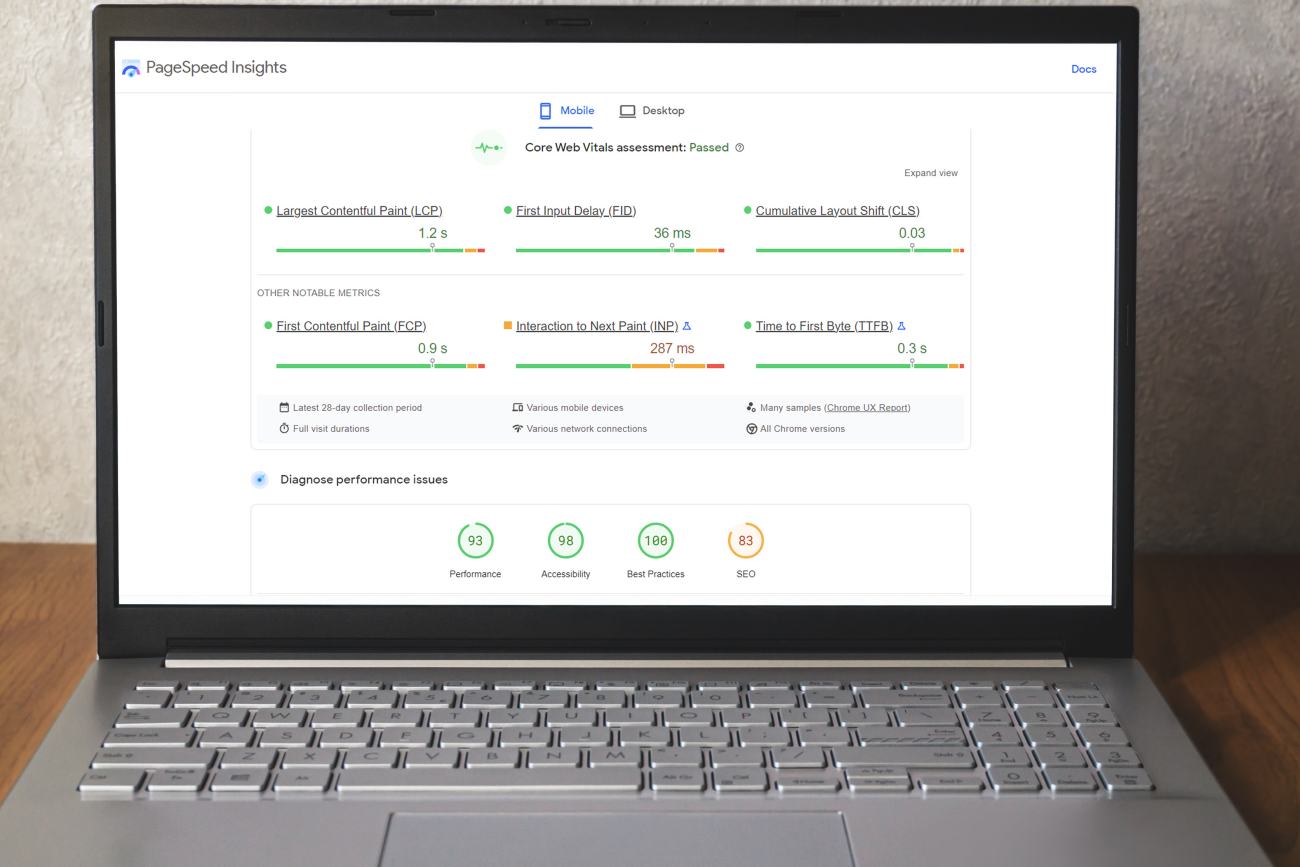
Google’s systems evaluate landing page quality and speed as part of Quality Score, which directly influences CPCs. Research conducted by Deloitte in partnership with Google demonstrated that even modest improvements in mobile load times increased conversions.
If an internal Ads team cannot diagnose or improve site performance, campaigns are hampered regardless of bidding strategy. Poor user experience reduces conversion rates, which drives up acquisition costs.
10. Invalid Traffic Remains An Ongoing Risk
Invalid traffic, defined as interactions without genuine interest, is a persistent issue across digital advertising. Google employs AI-driven systems to detect and filter out invalid clicks before charging advertisers, yet the system is not flawless.
Specialist oversight is needed to catch anomalies, review placement quality, and apply filters that further protect campaigns. In-house teams that overlook these checks risk losing a portion of budget to fraudulent or non-human activity.
Why Specialist Management Matters
Running Google Ads in-house can feel manageable at first, yet the challenges quickly compound. Without dedicated expertise, campaigns often underperform, and growth opportunities slip through the cracks.
At 321 Web Marketing, we create campaigns designed with precision to maximize performance across every channel. We carefully track every update, oversee spending, and continuously improve performance so you can grow your business with complete confidence.
If you’re ready to streamline your digital marketing and get more out of your advertising, contact us directly to schedule a consultation.

Kim Greer
OFP Law
One of the best business decisions I ever made was to contract with 321 Web Marketing. Jonathan Gessert and his team are knowledgeable, efficient, and effective, making digital marketing goals easy to achieve and helping [...]

Kelly Cole
Business Benefits Group
My company hired 321 Web Marketing in February 2016 to resurrect our web site. We feel our web site is the face to our business and desperately needed a make over. 321 took us from blah to WOW effortlessly and what a difference [...]

Emily Hawkins
Diener & Associates
Thanks to 321 Web Marketing, the client has seen an increase in their search engine leads, averaging 12 qualified leads per month. The client has also achieved prominent Google Maps and search placement. The team manages the engagement [...]

Trevor Telesz
Paw Pals Pet Sitting
321 Web Marketing successfully translated the client’s design into a stunning and refreshed website, ensuring seamless functionality across all dynamic views. The team provided clear timelines and stuck to them, keeping everything [...]

Corey Davis
Spartan Animal & Pest Control
321 Web Marketing is truly phenomenal at what they do. Their ability to communicate and describe the steps and actions that they are implementing , Alex Zarpas in particular, is excellent. Delivering on promises is all they have done for me [...]

Alec Roberts
MFE Insurance
I can’t say it enough, Jonathan and his team have gone above and beyond since day one to accommodate our needs and meet our goals. I run a specialty insurance brokerage based in LA and once we found 321 we never looked [...]

Richard Wilbur III
Advantage.Tech
Thanks to 321 Web Marketing’s web development work, the client increased rankings and traffic from search engines. Also, their business secured prominent positions on Google Maps and industry-relevant, profitable keywords. The client also [...]

Bruce Gemmill
FVCbank
After the website revamp, the client saw a steady rise in leads from search engines, resulting in additional traffic. 321 Web Marketing is highly punctual when it comes to deliverables, and internal stakeholders are impressed with the service [...]

Drew Weeks
VAE
321 Web Marketing delivered a sleek website that accurately portrays the size and quality of the client’s organization. All of their completed websites have received positive feedback from users who have been impressed by the UX/UI. The [...]

Ryan Masten
Masten Pools
321 Web Marketing has increased the client’s leads from zero to 53 monthly. Their SEO efforts pay off impressively due to a top-ranking position on Google and making the site the number one result for several local service keywords. The [...]